
Major Pond and the Camera
“I Wish Very Much You Were Here to Kodak Us”
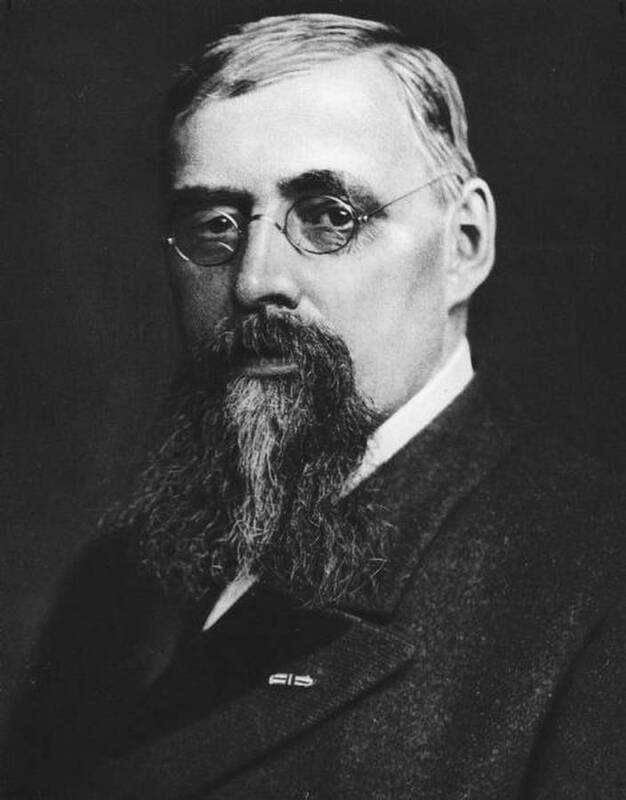
From the beginning of 1897, a new correspondent appears regularly in the Seaton House letters: Major James B. Pond, the American impresario who organised lecture tours for, among others, Mark Twain and Winston Churchill. Pond had identified Crockett as an attractive prospect for the American circuit and pursued him with considerable persistence. Crockett declined, consistently and graciously. Writing from Morley’s Hotel in London in January 1897, his reasoning was characteristic: “I fear I am not metal of which great orators are made. I think I am too much of a beginner to come to America just now.”
Despite the refusals, the two men met and became friends. Crockett invited to St Andrews in the summer of 1897, at a moment of some local significance: the Jubilee Course — named for Queen Victoria’s Diamond Jubilee and designed by John Angus — had opened as a twelve-hole course on 22nd June, created originally for ladies and beginners. Crockett writes to Pond from Seaton House on 23rd June after their visit. The timing places Crockett at St Andrews for the opening of the new course.
Pond brought a Kodak camera with him, then a relatively recent technology, and he photographed the Crocketts during his visit. Writing after Pond had returned home, Crockett was warm about both: “I am still going round the links twice a day and wish very much you were here to Kodak us as you did upon your all too short visit.”
By December, back at Bank House, Crockett reported that he had “taken up photography of late, having perhaps caught the infection from your box Kodak which did such execution on the links of St Andrews.”
The photographs Pond took at St Andrews may be lost. The exchange about Mark Twain, however, survives. In August 1897, Crockett wrote: “I like him the best of the lot. And I guess he’d like me, specially if he let me teach him golf.” The meeting never happened. Crockett continued to decline the American tour. In January 1899 he states he's been a bit under the weather and the final letter in the correspondence came in July 1899 - with Crockett observing he'd just returned from Spain and once again - too busy to contemplate an American tour.